Too Much Turkey?

This is only the second Christmas where I’ve been in charge of the shopping and the cooking and the first time it’s at my house. I’m really keen to make it extra special but  I also want to make sure that no food gets wasted.

To make things more difficult, it’s only a small gathering of three people but I still wanted a full turkey with all the trimmings. I couldn’t bring myself to resort to a turkey crown which would be much more suitable for a small gathering, it just wouldn’t be Christmas for me without a big bird stuffed on the table.

The smallest turkey I could find says it serves 6-8, and even with my gluttonous family, we won’t manage to scoff all 5kg down in one sitting, so it’s a good job that one of my favourite things about Christmas is the turkey left-over concoctions. I used to love sitting down to turkey butties on Christmas evening, already stuffed from lunch, the whole family would always manage to find room for a turkey sandwich in front of the TV, the final indulgence of the most indulgent day of the year.

Christmas is all about tradition and Boxing day tradition at my parents normally involved a trip to the football match. Lunch before we headed off would be simple cold cuts of turkey with some oven chips. Now this might not sound like a gastronomical delight but as a child it was probably my favourite meal of the festive period. The best thing for mum was that having slaved over the oven for the entirety of the previous day, no cooking was involved.

The other child-hood dish I remember that rose out of the turkey remnants was a turkey curry for dad. Mum used to freeze all the dark meat and then a week or so later dad would be in for a treat. The best thing about a curry is if you’re feeling extra lazy you don’t even have to cook it from scratch. There’s no shame in picking up a jar of already made curry sauce for a quick evening meal.

I’ve become a bit more adventurous with left-overs in recent years, boxing day now normally involves a salad; something a bit lighter to give the stomach a rest after the big day. An all round pleaser from recent times has been Jamie Oliver’s Asian inspired turkey salad. A quick simple and palette refreshing salad that not only makes use of the left-over turkey, but also other festive ingredients such as clementines, pomegranates and nuts.

This year, keeping with the festive spirit, we’re going for more of a Waldorf based salad using up turkey, cranberries and walnuts, but the salad munching possibilities are endless. The mantra really is “anything goes”.

In terms of the remaining turkey, I’m definitely going to follow in mum’s tradition and get a curry on the go, the spices in a curry make a nice change to the other flavours ingested over Christmas. We also received some lovely Japanese Ramen bowls for Christmas so I’m hoping to come up with a turkey ramen inspired recipe that I’ll keep you posted on.

There are thousands of recipes that call for left over turkey;  casseroles, pasta bakes and soups can all be created from left-overs. A few simple dishes that you can cook up, keep in the fridge/freezer and keep the family fed over the festive break.  It’s also not just the turkey that can be re-used, left over vegetables can be frozen, turned into soups or rostis.

Nigel Slater, recently had a great programme on BBC where he used all leftovers imaginable to create a wide variety of dishes including bubble & squeak patties and a delicious sounding perky turkey salad. I also saw a fantastic post from Recycle for Greater Manchester that spent the twelve days of Christmas using up all the leftovers.

There’s so many resources available, on-line, on TV and in print that there really is no excuse for food waste over Christmas and in my opinion you never really can have too much turkey.

So get cooking and it would be great to hear about any left-over concoctions of your own.

Grilled Halloumi and Cherry Tomatoes with Mint Pesto

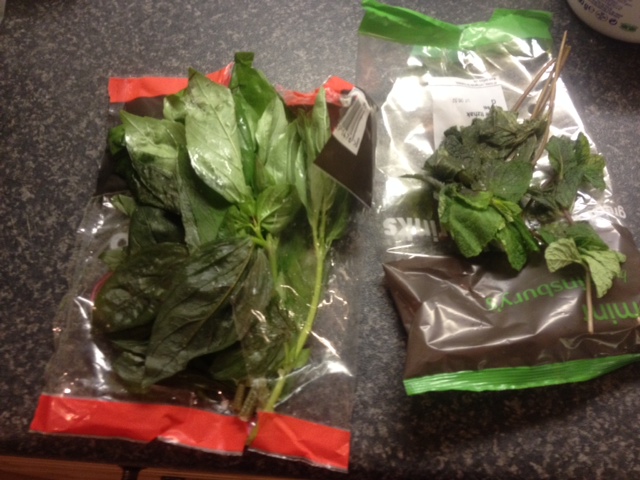
Despite the packaging on the Basil clearly reading “keep me away from the cold”, the packet of Basil had ended up squished in the bottom of the fridge past it’s prime, alongside a few sprigs of floppy mint and some wrinkly cherry tomatoes.

image

Normally when I have left over Basil, I make myself some home-made pesto and as I only had a few sprigs of mint left, I decided to throw them in. I’ve never made any other pesto other than bog standard pesto but I’ve heard adding mushrooms, mint and a whole other host of ingredients can create great variations on the original.

I couldn’t remember the correct measurements so I just threw all the herbs into a blender with two tbsps of toasted pine-nuts, a crushed garlic clove and a good glug of olive oil. I always find pesto takes a while to blend, during the blending I gave the mix an occasional stir and gradually added more olive oil until I was happy with the consistency.

After I tipped the mix out of the blender for a taste test, I discovered my hap hazard approach to pesto making had led to me missing out a vital ingredient…parmesan.

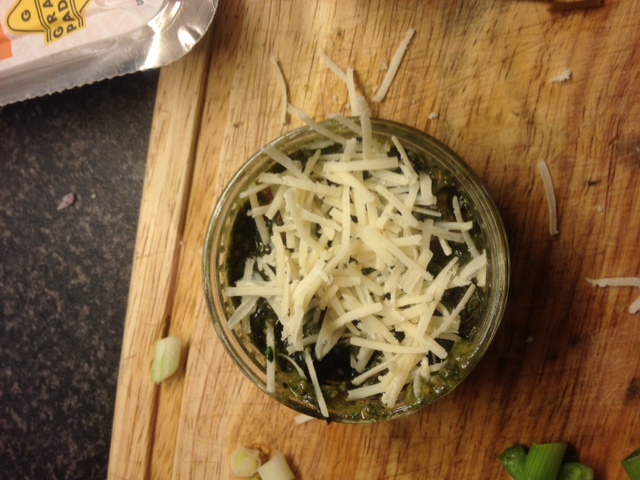
Not wanting to re-blend, I just added grated parmesan to the finished product (probably not how the Italians do it but hey-ho it tasted pretty good).image-3image-4

 The best thing about making any paste from fresh herbs, is that it pro-longs the life of the herbs and can be used for a huge variety of dishes such as pasta sauces, meat marinades or salad dressings.

I decided to go for the old BBQ classic of grilled halloumi and cherry tomatoes, a proper recipe for which can be found at bonappetit.com.

As I didn’t have a BBQ, or any skewers, I continued with my hap hazard approach to cooking by throwing halloumi and cherry tomatoes into an oven-proof dish, and whacked them underneath the grill for 5 minutes before mixing with the pesto.

And hey presto,  a few wrinkly past their best ingredients created a great dish that can be eaten as an appetizer or lightish supper/salad.

image-1

Caerphilly Cheese Scones

On Saturdays’ check of the fridge, I discovered a whole host of dairy products dangerously close to their use by date. A couple of eggs, the remnants of a yoghurt pot and a whole block of Caerphilly cheese that I’d bought (despite all my own advice) in a BOGOF offer.

Lacking in inspiration, the only meal idea I could come up with was a cheese omelette and a high cholesterol omelette at that. Also, following a rather unhealthy few days of eating out, the thought of a cheese filled week was filling me with indigestive dread.

But a quick google search  came to the rescue showing  me that caerphilly cheese and eggs are the perfect base to a delicious batch of savoury scones. I followed the following recipe from  Goodtoknow.co.uk:

Ingredients

  • 200g (7oz) self-raising flour
  • Good pinch of cayenne pepperImage 5
  • 100g (3½oz) butter
  • 125g (4oz) Caerphilly cheese, grated
  • 3 spring onions, trimmed and finely chopped
  • 2 medium eggs, beaten
  • 2 level tbsp plain yogurt

The best thing about the recipe, was that I had all the items (except the spring onions) already in stock. I opted to buy a bunch to use later in the week,  but I’m sure the scones would still taste great without them.

Now I’m not much of a baker but even for the me the recipe was super simple to follow:

Method

  • Set oven to Gas Mark 6 or 200°C. Sift flour and cayenne pepper, into a bowl. Rub in the butter until it resembles fine breadcrumbs.
  • Add just over three-quarters of the cheese and the chopped spring onion, and mix well. Stir in the eggs and yogurt. The dough will be very soft. Knead very lightly on a floured surface.

I got to the breadcrumbs stage pretty quickly:

Image 1Image 4

However, I was uncertain about the consistency of my  dough. It was super sticky but rather than adding more flour to the mix, I just made sure my work surface and rolling pin was super floured and rolled extra gently.

Image 3

  • Pat out dough to about 2.5cm (1in) deep and cut out 5 rounds. Knead the trimmings and pat out, then cut out another 2-3 scones. Put the scones on the baking sheet and sprinkle with the rest of the cheese, and more cayenne, if you like.

I’m also not sure I’m very good at measuring as my scones certainly weren’t 1 inch deep.

Image 6

  • Bake for 20-25 minutes. Best served warm with butter and a sliver of cheese

Despite the sticky dough and my inability to measure, the scones turned out super fluffy and light and are a great snack sized portion.

Image The best thing about the scones is that they can be frozen, so 3 ingredients on the edge of their use by date have now become a great savoury snack to be eaten at a later date.

I also can’t wait to sample Goodtoknow.co.uk suggestion of having them as a savoury meal with some poached egg and spinach.

And, if you’re wondering what happened to the rest of the block of cheese and remaining spring onions, I discovered a delicious recipe for some Caerphilly Cheese & Leek Pancakes where I substituted the leeks for the left-over spring onions and half a red onion that I found in my fridge.

So from potential food waste came 2 delicious meals, all costing pennies in additional ingredients, and no boring omelette in sight.

Shop but don’t drop! (How to shop to reduce food waste)

Following on from last weeks blog about the basics of meal planning, the next stage is the shop.

You should already have your list for all the ingredients needed for your planned meals, so make sure that you don’t leave the house without it. Sticking to the list should make your shop relatively easy, although the supermarket can be littered with many potential food waste mine fields.

Now I have the benefit of living very close to a supermarket, this means that I can pick up ingredients throughout the week with little or no effort. I tend to pick up the bulk of my shop on the Saturday but leave any perishables that I know I don’t need until later in the week. I’ll pick up these remaining items later in the week which means they’re fresher when I come to use them and if there’s been any curve balls during the week, with meals being missed, it will help to reduce food waste.

One of the important things about the list is to ensure that you’ve got down quantities needed for the recipes, this will stop you buying bulk ingredients that aren’t needed and will later rot.

The fruit and veg aisle for me is the most likely to result in food waste, I tend to never buy pre-packaged vegetables. Generally the quantities are much higher than needed, you also can’t always assess the quality of the vegetables and quite often pre-packaged fruit is actually higher priced than the individual items.

Another supermarket trick that I find can lead to increased food waste is the BOGOF and multi-buy offers. Now I’m all up for saving cash but in reality, you’re not saving if the food ends up in the bin. Before I take advantage of any offer, I ask myself the following 2 questions:

Will I use it before the use by date?

If not, can it be frozen?

If the answers no to both of these questions, then I leave it on the supermarket shelf.

My final tip would be the food storage, I basically freeze all items that can be if I’m not using them over the next two days. This again means that if any thing crops up during the week and I have to skip any of the meals planned, the products don’t have to be thrown away. Before I freeze the shopping,  I split up the packages into portion sized freezer bags to avoid having to defrost more than needed when it comes to use the food

And to be honest, as shopping tips go, that’s all I have. The meal plan and list really is the key, but I would love to hear from anyone who has their own tips.

Fail to plan, plan to fail (the basics of meal planning).

Now I’m certainly no saint, and food (very occasionally) gets thrown away in my house. This tends to happen when I’ve not planned ahead.

Saturday mornings in my house are spent with a cup of tea, a scurrage around the kitchen cupboards to see what perishable items need using up, and some time in front of my computer planning the meals for the week ahead.

This might not be the ideal Saturday morning for many of you, but believe me, a quick 30 minutes of planning will not only reduce your food wastage, but is likely to reduce your food bills as well.

THE BASICS

Little Miss Hubbard…

The first step in my weekly meal planning is to see what ingredients I already have in stock. These ingredients will form the basis of the following weeks meal plans. Perishable items such as fruit and veg are to be used up first, whilst any items that are frozen or have long-shelf lives can be used if they fit into a recipe that incorporates the “must use” perishables.

Planning ahead…

My partner and I have pretty busy lives and our schedules are never the same each week. Sometimes we’ll be home and eating together every night at 7pm, other weeks we’ll only see each other at breakfast. To ensure that this doesn’t result in thrown away food, I check our expected schedules for the week before I plan the weekly shop. This means that I’m not planning additional meals that won’t get eaten, it also takes into account time available which impacts whether I’m cooking up a culinary storm or emptying a tin of beans into a saucepan.

Where to start…

So, mentioned earlier were the perishable items already lurking in the kitchen cupboard, these will be the starting point for the meal plan. The ingredients might include an onion, some potatoes, cheese on it’s use by date etc…so therefore my recipes for the week have to contain these items. How you plan your recipes is up to you, you might have a full database of recipes in your head, be an inventive chef who can knock up a new invention with the available ingredients, or be like me who uses the powers of the internet and a meal planning app.

The meal plan…

To start, I’ll use the above 3 ingredients as a basis for my meal plan. I’ve got potatoes and onions, and I might have some sausages in the freezer, therefore with a few extra ingredients I reckon I can knock up a yummy sausage casserole. What I have will make 4 portions, therefore I can take left-overs for lunch, save them for a night when I haven’t got time to cook, or freeze for a later date.

I’ve now got some cheese to use up, I probably had to buy some tomatoes for my sausage casserole and cheese and tomatoes sound like a pretty tasty base for a pasta bake. I’ve now used up all the perishables that I had in, but probably had to buy some additional ones for the recipes above. Therefore I repeat the same process for the new ingredients and keep repeating until I’ve got a full weeks plan.

Don’t worry if you’re not a confident cook, the fundamentals of meal planning still apply, whether you cook everything from scratch or rely more on sauces and meals that come out of a jar or packet. However, hopefully you’ll find that introducing new recipes into your meal plan will increase your kitchen confidence.

The List…

The final piece of the plan is the shopping list, write down all the ingredients and quantities needed for your weekly meals, don’t forget the weekly essentials and add any snacks that you want for the week ahead, and hey presto, your meal plan is finished and you’re ready for your shop… 


UK families throw away almost a meal a day!

I’ve wanted to start a blog for a while, but could never quite motivate myself to get started. The motivation came last week, when yet another news story broke about the insane amount of food wastage in the UK.

According to statistics in the Guardian, the average UK family is throwing away  almost a meal a day, a cost of £60 a month. When converted to food quantities, the numbers are mind-blowing (86 million chickens, 24 million slices of bread, 5.8 million potatoes….). In a country where food poverty is on the increase, as is the reliance of food banks, it’s staggering to think that the solution to these problems, may partially lie in our own kitchen cupboards.

In my experience, most food wastage in the house occurs due to over-buying, poor planning and a lack of cooking skills. We’ve all seen the Jamie Oliver campaigns on teaching the nation to cook and eat healthy meals, the consumer programmes advising how to reduce food waste & shopping bills, alongside the media criticism of the supermarkets’ contribution to the problem via BOGOFF offers and use by dates.

This blog, on the other hand, isn’t meant to be a campaign or a lecture. It isn’t intended to be a criticism of other peoples habits, it’s simply a narrative of how me, as a busy working professional, keeps food waste to the minimum. I’ll be updating people with weekly meal plans, shopping lists and attempts and failures at new recipes & ingredient combinations, for any one who’s interested in not only reducing food waste but also food in general.